










Cold wind on the walk to work, dry heating all evening, a long hot shower to warm up: by January, skin has had enough. Cheeks feel tight, flaky patches appear around the nose and some of us get a red, itchy “winter rash” every year. A good winter skincare routine is not about adding more products. It is about cleansing more gently, putting water back into the skin and keeping it there.
- Wash with lukewarm water and a balm, milk or cream cleanser, not a foaming one.
- Apply moisturiser to slightly damp skin, morning and night.
- Add a few drops of face oil over your cream where skin still feels rough.
- Pause scrubs, strong acids and retinoids while skin is red or stinging.
- Protect hands and lips too, and get a persistent rash checked by a pharmacist or GP.
Why skin struggles in winter
The outer layer of your skin works like a brick wall: skin cells are the bricks and a mix of natural lipids is the mortar that holds water in and keeps irritants out. Winter weakens that mortar from both sides. Cold air holds very little moisture, wind speeds up evaporation, and indoor heating dries the air further. Add hot showers, wool scarves rubbing against the chin and the habit of reaching for stronger products when skin looks dull, and the barrier struggles to keep up.
The result is familiar: tightness straight after washing, rough or flaky patches, make-up that clings to dry areas, and skin that suddenly reacts to products it tolerated all year. If you already changed your routine in autumn, winter is usually about doing the same things more consistently. Our autumn skincare routine covers the first adjustments; this guide picks up where it leaves off, for the coldest months.
Dry, dehydrated or winter rash? Read the signs first
These problems look alike in the mirror, but each needs a slightly different fix. Spend a minute working out which one you have before buying anything new.
| What you notice | Likely cause | What to change |
|---|---|---|
| Tight and uncomfortable straight after washing | Cleanser or water temperature too harsh | Switch to a balm or milk cleanser; use lukewarm water |
| Dull, tight, yet shiny by midday | Dehydration (short of water) | Hydrating serum or mask on damp skin, then moisturiser |
| Rough, flaky patches that feel dry all year | Naturally dry skin (short of oil) | Richer cream at night and a few drops of face oil |
| Red, itchy, rough patches after cold or wind | Winter rash: an irritated, dry barrier | Strip the routine back to cleanse, moisturise, protect |
| Stinging from products that used to feel fine | Irritation, often from too many actives | Pause acids, scrubs and retinoids for one to two weeks |
The winter skincare routine, step by step
You do not need to replace everything. Keep what still feels comfortable and change the step that has stopped working. For many people that is just the cleanser and the night cream.
Cleanse with a balm, not a foam
If your face feels tight and “squeaky” after washing, the cleanser has removed more than make-up and grime; it has taken lipids your barrier needs. In winter, a balm or milk is kinder, especially in the evening when you are removing SPF and make-up.
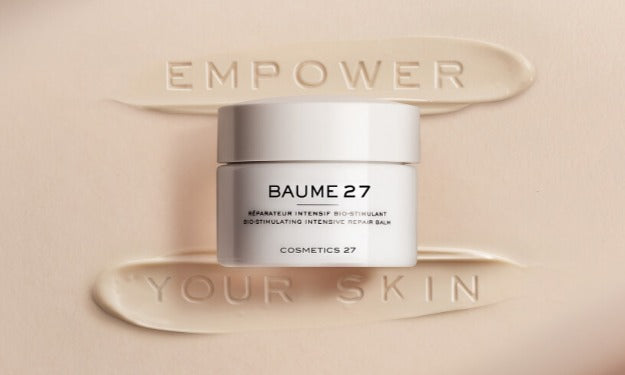
Cosmetics 27 Cleanser 27 is a three-phase cleansing balm: it melts into an oil as you massage it in, then turns into a milky emulsion with water, and is designed to leave dry, dehydrated skin soft rather than tight. Because it also exfoliates gently, use it once a day if your skin is reactive. In the morning, a splash of lukewarm water or a gentle second cleanse is often enough. Browse more cleansing oils and balms.
Put water back in
Dehydration is about water, not oil, so a heavier cream on its own will not fix it. Ingredients that attract water, such as hyaluronic acid and glycerin, need to go on first, on slightly damp skin, and be sealed in straight afterwards.
On days when skin looks dull and feels tight, a hydrating mask is a quick reset. Ursa Major Vital Spring Hydration Mask is a fast-acting mask designed to boost hydration in as little as five minutes and leave skin soft and supple. Use it after cleansing, rinse, then moisturise while skin is still slightly damp.
Moisturise twice a day, on damp skin
Moisturiser is the step that does the most work in winter. Apply it within a couple of minutes of cleansing, morning and night, and be generous on cheeks, around the nose and anywhere exposed to wind.
Ursa Major Golden Hour Recovery Cream is rich but fast-absorbing, and is described by the brand as soothing and replenishing for all skin types, which makes it a good daily cream that also works as a night cream when skin feels dry. For more textures, from light lotions to rich creams, see our natural moisturisers and the dryness edit.
Seal it with a few drops of face oil
A face oil softens rough, weather-beaten skin and helps reduce water loss. It works best as the final layer of your evening routine, pressed over your moisturiser, rather than as a replacement for it. Two or three drops are enough.
HoliFrog Caspian Restorative Silk Amino Face Oil is made with 94% plant oils, hydrolysed silk and calming herbal extracts, and is designed to absorb without shine while it helps with dryness and discomfort. If you prefer to keep oil away from blemish-prone areas, use it only on dry cheeks. Explore our face oils.
Protect in the morning
Daylight is short but UV is not zero, and snow reflects it strongly. On bright days, outdoors and especially if you use retinoids or exfoliating acids, keep a broad-spectrum SPF as the last morning step. A scarf over the lower face on long, windy walks does more for winter skin than most products. See our natural suncare.

Balm that melts to oil, then rinses to a milk.
Shop now →
Five-minute hydration mask for dull, tight days.
Shop now →
Rich yet fast-absorbing everyday cream.
Shop now →
Silk amino face oil that absorbs without shine.
Shop now →Cleansing balms for cold weather
Melt away make-up and SPF without the tight, stripped feeling winter skin hates.
Shop cleansing balmsCalming winter rash and redness
“Winter rash” is not a medical term. People use it for patches of skin that turn red, rough, itchy or scaly when the weather gets cold, most often on the cheeks, around the mouth and nose, and on the backs of hands. It usually comes from a dry, irritated barrier, and anyone can get it, although people with sensitive skin, eczema or rosacea tend to notice it first.
When it appears, the most helpful thing is to do less, more gently:
- Strip the routine back to a gentle cleanser, moisturiser and, in the morning, SPF. Pause scrubs, peels, strong acids and retinoids until skin feels comfortable for several days.
- Moisturise more often, not just more heavily. A thin layer reapplied during the day on exposed areas helps more than one thick layer at night.
- Turn the water down. Hot water feels soothing on itchy skin but makes the dryness behind it worse.
- Choose fragrance-free on irritated areas. Fragrance, including essential oils, does not suit every sensitive complexion.
- Patch-test new products on a small area for a few days before using them all over.
If you know your skin is eczema-prone, our moisturisers for eczema-prone and sensitive skin and cleansers for sensitive skin are a good starting point, and the redness edit gathers soothing formulas in one place. A rash that is sore, cracked, weeping, spreading or not improving after two weeks needs a pharmacist or GP rather than another product.
In winter, comfort comes first. Exfoliation can wait until skin no longer feels tight or sore.
Hands, lips and body
Faces get most of the attention, but hands and lips are often the first to crack. They have fewer oil glands, are washed or licked constantly and spend most of the winter exposed to cold air.
Hands
Apply hand cream after every wash, not just at night, and wear gloves outside. Keep a small tube by the sink and in your bag. Grown Alchemist Vanilla & Orange Peel Hand Cream is made to soothe, soften and hydrate dry hands and cuticles. More in our hand creams.
Lips
Do not lick dry lips: saliva evaporates and leaves them drier. Use a nourishing balm or oil throughout the day and before bed. RMS Beauty Legendary Lip Oil conditions and softens with a sheer tint and shine, without stickiness.
Body
Shins, elbows and knees dry out fastest. Moisturise within a few minutes of a warm (not hot) shower, while skin is still damp, so the cream or oil holds water in. A rich body butter or oil works well at night.
Feet
Cracked heels are common in winter. A thick foot cream at night under cotton socks softens hard skin; deep or painful cracks are worth showing to a pharmacist or podiatrist.

Soothes and softens dry hands and cuticles.
Shop now →
Nourishing lip oil with a sheer tint and shine.
Shop now →Winter habits that help your skin
- Keep showers short and warm. Pat skin dry rather than rubbing it, then moisturise straight away.
- Add moisture to the air. If the heating makes your bedroom noticeably dry, a humidifier can make skin more comfortable overnight.
- Cover up outside. Gloves and a soft scarf protect against wind, the main cause of rough, red cheeks.
- Drink enough fluids and eat well. Hydration from the inside will not fix a damaged barrier on its own, but feeling well looks after skin too.
- Change one thing at a time and give it a couple of weeks, so you know what actually helps.
Common winter skincare mistakes
- Scrubbing away flakes. If the flakes come from irritation, exfoliating gives a day of smoothness and then more sensitivity.
- Using the same foaming cleanser as in summer. It is often the single biggest cause of winter tightness.
- Saving moisturiser for the evening only. Morning cream protects skin before it meets cold air.
- Adding several new products at once. If skin reacts, you will not know which one caused it.
- Dropping SPF while keeping retinoids or acids. That is exactly when sunscreen matters most.
Your winter morning and evening plan
- Rinse with lukewarm water or cleanse gently.
- Hydrating serum on slightly damp skin, if you use one.
- Moisturiser, generously on exposed areas.
- Broad-spectrum SPF on bright days or if you use actives.
- Lip balm and hand cream before you go out.
- Melt off make-up and SPF with a cleansing balm.
- Hydrating mask once or twice a week if skin looks dull.
- Moisturiser on damp skin.
- Two or three drops of face oil on dry areas.
- Hand cream and lip oil before bed.
Skincare for dry winter skin
Cleansers, creams and oils chosen for skin that feels tight, rough or flaky.
Shop the dryness editReady to build your winter routine? Start with our cleansing balms, add a richer moisturiser and a face oil, and keep hand cream within reach all season.
Frequently asked questions
What is winter rash?
Winter rash is an everyday name for dry, irritated skin that turns red, rough, itchy or flaky in cold weather. Low humidity, cold wind, central heating and hot showers all draw moisture from the skin. It is not a diagnosis: a rash that is painful, weeping, spreading or does not settle with gentle care should be checked by a pharmacist or GP, as it may be eczema or another skin condition.
How do I get rid of winter rash on my face?
Simplify your routine: wash with lukewarm water, use a non-foaming cleanser, apply moisturiser to slightly damp skin twice a day and pause exfoliating acids, scrubs and retinoids until skin feels comfortable. Avoid heavily fragranced products on irritated areas. If the rash has not improved within two weeks, or is sore, cracked or infected, speak to a pharmacist or GP.
What is the difference between dry and dehydrated skin?
Dry skin is short of oil and tends to feel rough and tight most of the year. Dehydrated skin is short of water and can affect any skin type, including oily skin; it often looks dull and feels tight, yet may still shine by midday. In winter many people have both, which is why the routine adds water first and then seals it in with a richer cream or oil.
Should I use a heavier moisturiser in winter?
Only if your usual one stops keeping skin comfortable. Try applying it more generously, adding a few drops of face oil at night or using a richer cream on dry areas only before replacing it altogether. Thin, even layers on slightly damp skin work better than one thick layer.
Is it bad to have hot showers in winter?
Very hot water and long showers strip the natural oils that help skin hold on to water, which is why skin often feels tightest straight afterwards. Keep showers short and warm rather than hot, pat skin dry and moisturise within a few minutes.
Do I need sunscreen in winter in the UK?
UV levels are lower in winter but they are not zero, and snow reflects UV strongly. Keep a broad-spectrum SPF in your morning routine on bright days, outdoors, at altitude and especially if you use retinoids or exfoliating acids.
How long does it take for winter dry skin to improve?
Comfort after cleansing can improve within a few days once a harsh step is removed. Give the routine two to four weeks before judging it. Persistent, painful or worsening dryness is a reason to get advice rather than to keep adding products.
Product details and availability checked on 22 October 2026. This article is for general information and is not medical advice.


