





If your hair knots the moment it dries, feels rough at the ends or puffs up in damp British weather, the missing step is often a small one. A leave-in conditioner is a light conditioner you apply after washing and do not rinse out. It makes hair easier to comb, softer and calmer until the next wash, and it is one of the simplest ways to take care of dry ends and curls through the winter months.
- Leave-in conditioner detangles, softens and helps hold moisture in hair between washes.
- It does not replace rinse-out conditioner for most hair; it adds a lighter layer that stays on.
- Apply it to damp, towel-blotted hair, from mid-lengths to ends, then comb through.
- Use a few sprays for fine hair and more, or a cream, for thick, curly or coily hair.
- Too much leaves hair limp or greasy; start small and add only where hair still feels dry.
What does leave-in conditioner actually do?
Each hair is covered by overlapping cells called the cuticle. When it lies flat, hair shines, slides past its neighbours and holds on to water. Washing, brushing, heat, colour and weather rough it up, most of all at the ends, the oldest part of the hair. Rough hair catches on itself: that is where knots, snapping and frizz come from.
Conditioners deposit a thin film of conditioning ingredients on the surface of the hair to smooth that cuticle. A rinse-out conditioner does most of this in the shower, then most of the product goes down the drain. A leave-in conditioner is lighter and stays in, so it keeps working after you step out: a comb glides through with less pulling, hair dries softer, and the ends feel less straw-like the next day.
What it will not do is repair hair permanently. Split ends cannot be glued back together by any product; a leave-in can make them look and feel smoother, but a trim is the only way to remove them.
Leave-in vs rinse-out conditioner, hair mask and hair oil
These four products overlap, which is why so many routines end up doubling one step and missing another. The simplest way to tell them apart is by where they go, how long they stay and how much they do.
| Product | When and how long | What it is for |
|---|---|---|
| Rinse-out conditioner | Every wash, left one to three minutes, then rinsed | The main conditioning step after shampoo: softness, slip, fewer tangles |
| Leave-in conditioner | After washing, not rinsed; also on refresh days | A light lasting layer for detangling, frizz and dry ends until the next wash |
| Hair mask | Once a week or so, five to twenty minutes, then rinsed | A deeper treatment for dry, coloured, curly or damaged hair |
| Hair oil | A few drops on the ends, damp or dry | Seals the surface, adds shine and smooths flyaways; best as the last step |
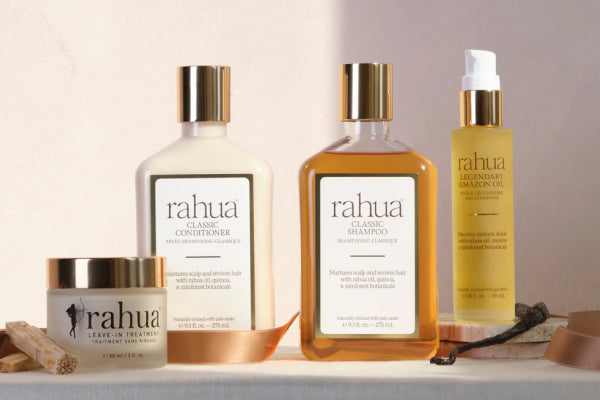
In practice they work as a team rather than as alternatives. A typical routine for dry or curly hair is shampoo, rinse-out conditioner, leave-in, then a styler or a few drops of oil, with a mask replacing the rinse-out conditioner once a week. For a deeper weekly treatment, the Rahua Hydration Hair Mask is made for dry, thick, curly and porous hair and sits well alongside a lighter leave-in.
Who needs a leave-in conditioner, and who may not
You are likely to notice a clear difference if any of these sound familiar:
- Hair tangles easily after washing, especially long hair or hair that dries in knots at the nape.
- Ends feel dry or rough even when the roots look clean, often a sign that the lengths need more care than the scalp.
- Curly, coily or wavy hair, which tends to be drier because natural oils travel down a curl less easily than down a straight strand.
- Coloured, lightened or regularly heat-styled hair, where the cuticle has had more wear.
- Frizz in damp weather or static in heated rooms.
You may not need one if your hair is short, fine and oily at the roots, or if it already feels soft and combs easily after conditioner. If unsure, try a light spray on the ends only, a couple of times a week.
How to use leave-in conditioner
The method matters as much as the product. Most problems people have with leave-ins, such as greasy roots or crunchy ends, come from putting too much in the wrong place.
Wash and condition as usual
Shampoo the scalp, then use your rinse-out conditioner on the lengths and rinse. If your hair is fine, a lighter conditioner leaves more room for a leave-in afterwards. If you are switching to gentler cleansing, our guide to sulfate-free shampoo explains how to make the change.
Blot, do not rub
Squeeze out water with a soft towel or a cotton T-shirt. Rubbing roughs up the cuticle you have just smoothed. Hair should be damp, not dripping: too much water dilutes the product and it runs off.
Apply from mid-lengths to ends
Hold a spray about 15 to 20 cm away and mist section by section, concentrating on the ends. For a cream, warm a small amount between your palms and smooth it down the lengths. Keep it away from the roots unless the directions say otherwise.
Comb through from the ends up
Use a wide-tooth comb or your fingers. Start at the ends and work upwards a few centimetres at a time, holding the hair above the knot so you do not pull on the scalp.
Style, protect, then seal
Add any styler next: a curl cream or gel for curls, a heat protectant before blow-drying if your leave-in is not one. Finish with one or two drops of hair oil on the very ends if they still feel dry once styled.

Light detangling spray with aloe vera and tamanu oil for all hair types.
£26 · 295ml
Shop now →
Leave-in and heat-protection spray that conditions ends without weight.
£29 · 236ml
Shop now →
Moisturising detangling mist for damp or dry hair; smooths frizz.
£38 · 193ml
Shop now →
Hydrating gelee with flexible hold for curly, coarse and coily hair.
£26 · 295ml
Shop now →
Nourishing cream to hydrate, shape and define curls and calm frizz.
£26 · 295ml
Shop now →
Silicone-free plant oil blend for shine and smoother-looking ends.
£46 · 47ml
Shop now →
Leave-in conditioners for softer, easier hair
Light sprays and detangling mists to apply after washing and leave in: less pulling, less frizz, smoother ends.
Shop leave-in conditionerHow much leave-in conditioner to use for your hair type
Amounts are a starting point, not a rule. Start with the lower end, let your hair dry, and add more next time only if the ends still feel dry or tangle.
| Hair type | How much to start with | How to apply |
|---|---|---|
| Fine or straight | Two to four sprays | Ends only, after washing; skip refresh days if hair goes flat |
| Medium or wavy | Four to eight sprays, or a pea-sized amount of cream | Mid-lengths to ends on damp hair; scrunch waves rather than combing once dry |
| Thick, curly or coily | A generous mist section by section, or a coin-sized amount of cream per section | Work through each section and detangle while hair is wet |
| Coloured, bleached or heat-styled | Four to eight sprays, focused on the ends | Every wash; choose a heat-protecting leave-in or add one before hot tools |
If hair still feels dry and coated after a good leave-in, hard water or product build-up is a more likely cause than too little conditioning. Our autumn hair care routine covers scalp care, build-up and hard water in more detail.
Leave-in conditioner for curly hair
For curly and coily hair, the leave-in is not an optional extra; it is usually the base layer of the whole styling routine. Curls are drier and more fragile at the bends of each strand, and they tangle more readily, so detangling with plenty of slip is essential. The order that suits most curls is:
- Leave-in on soaking-wet to damp hair, section by section, then detangle with fingers or a wide-tooth comb.
- A curl cream for softness and definition, such as Innersense Quiet Calm Curl Control, smoothed or raked through.
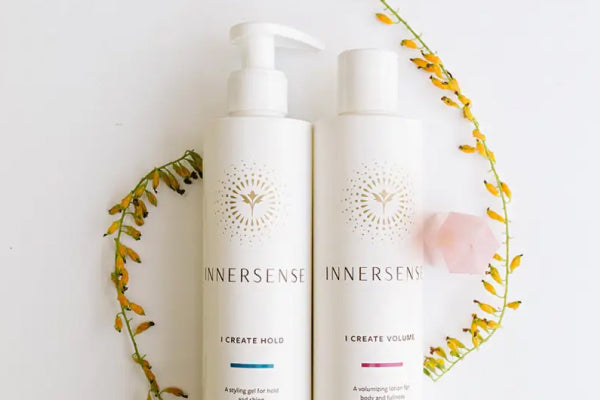
- A gel for hold if your curls drop by midday: Innersense I Create Curl Memory is a hydrating gelee with flexible hold, made for coarse, curly and coily hair. Scrunch it in while hair is still wet.
- Dry without disturbing the curls, with a diffuser on low or air-drying, then scrunch out any stiffness once fully dry.
On the second or third day, curls rarely need a full wash. Mist them lightly with water and a little leave-in, scrunch, and leave them to dry. A light spray such as Innersense Sweet Spirit Leave-In Conditioner works well for this because it adds moisture without stickiness. If curls feel heavy or lose their shape, you are probably layering too much; drop one product rather than adding another.
Use less than you think, on wetter hair than you think. Most leave-in problems are a matter of amount and placement, not the product.
Spray, cream or oil: which leave-in to choose
Texture is the quickest way to narrow the choice. Sprays spread thinly and suit fine to medium hair; creams carry more conditioning and suit thick, curly or very dry hair; oils seal and add shine but do not hydrate on their own.
For everyday detangling, all hair types
Innersense Sweet Spirit Leave-In Conditioner is a lightweight detangling spray with aloe vera, eucalyptus, rosemary, tamanu oil and a touch of honey. Innersense says it boosts moisture, calms frizz and helps even out porosity, so it suits hair that is dry at the ends and smoother at the roots. Note the honey if you prefer vegan formulas.
For dry ends and heat styling
Yarok Feed Your Ends Leave-In Conditioner is a leave-in conditioner and heat-protection spray in one, with essential oils and a lightweight formula designed to condition ends without weighing them down. A good choice if you blow-dry or straighten and want one product instead of two.
For long hair that knots easily
Rahua Hydration Detangler + UV Barrier is a moisturising mist made to make hair instantly brushable. Spray it generously on damp or dry hair and comb through; the brand says it softens hair and smooths frizz, and it carries a light passion fruit and mango scent.
For sealing the ends
Rahua Legendary Amazon Oil is not a leave-in conditioner but a finishing oil: a silicone-free blend of rahua, sacha inchi and morete oils for shine, frizz and the look of split ends. Use one or two drops after your leave-in, not instead of it.
Common leave-in conditioner mistakes
- Applying it to the roots. The scalp makes its own oil; leave-in near the roots is the usual cause of flat, greasy-looking hair.
- Using it on dripping-wet hair. Much of the product runs off with the water. Blot first.
- Too much at once. Hair that feels sticky, stringy or coated is overloaded. Halve the amount next time.
- Skipping it on heat-styling days. Unless your leave-in is labelled as a heat protectant, add one before hot tools.
- Brushing from the roots down. Start at the ends and work up, or the leave-in cannot prevent the pulling it is there to stop.

Curl creams and gels to layer over your leave-in
Define, hold and soften curls without stiffness: the next step after a leave-in for curly, coily and wavy hair.
Shop hair stylingReady to build your routine? Start with our leave-in conditioners, pair them with a rinse-out from our natural and organic conditioners, add a weekly treatment from hair treatments and masks and finish with a few drops from our natural hair oils. For frizz-prone hair, browse products for frizz, or explore the full natural haircare edit.
Frequently asked questions
What does leave-in conditioner do?
It adds a light, lasting layer of conditioning after you wash. That layer smooths the surface of the hair so a comb glides through, reduces the friction that leads to snapping and fluffiness, and helps hair hold on to moisture until your next wash. Unlike a rinse-out conditioner, it is designed to stay in, so the formula is lighter and is used in smaller amounts.
Can I use leave-in conditioner instead of regular conditioner?
Some people with fine or short hair do, especially between washes, but for most hair the two do different jobs. Rinse-out conditioner does the heavier conditioning in the shower; leave-in conditioner adds a lighter layer that stays on to help with detangling, frizz and dry ends. If your hair is long, dry, curly or coloured, use both.
How long should you leave conditioner in your hair?
It depends on the type. A rinse-out conditioner usually needs one to three minutes before rinsing, and a hair mask five to twenty minutes; follow the instructions on the pack. A leave-in conditioner is not rinsed out at all: it stays in until your next wash.
Can you use leave-in conditioner every day?
Yes, if your hair needs it and you keep the amount small. Dry, curly and coily hair often benefits from a light mist or a small amount of cream on refresh days. If hair starts to feel coated, limp or greasy, use less, apply it to the ends only, or skip a day.
Do you put leave-in conditioner on wet or dry hair?
Most leave-in conditioners work best on damp, towel-blotted hair, because water helps spread a small amount evenly. Light sprays can also be misted on dry hair to tame flyaways or refresh curls; check the directions for your product, as some are made for damp hair only.
Is leave-in conditioner good for fine hair?
It can be, as long as you choose a light spray and use very little. Mist it from mid-lengths to ends, never at the roots, and comb through. If fine hair still looks flat, use it only on the ends or only after washing rather than every day.
Does leave-in conditioner protect hair from heat?
Only if it is formulated and labelled as a heat protectant. Some leave-ins double as one: Yarok describes Feed Your Ends as a leave-in conditioner and heat-protection spray. If yours does not say so, add a separate heat-protection product before blow-drying or using hot tools.
Product details, prices and availability checked on 4 November 2026. This article is for general information and is not medical advice.


