


If your hair feels squeaky, then straw-like by the next morning, or your colour seems to wash out faster than it should, the shampoo is the first thing to look at. Sulfate-free shampoo (or sulphate-free, in British spelling) swaps the strong detergents found in many everyday shampoos for milder cleansers. It is not automatically better for everyone, but for dry, curly, colour-treated or sensitive hair it is often the single most useful change you can make. Browse our natural and organic shampoos, or read on to work out whether you need one.
- Sulfates (mainly SLS and SLES) are strong, cheap detergents that create a big lather and remove oil very efficiently.
- Sulfate-free shampoos use milder cleansers. They suit dry, coarse, curly, colour-treated and frequently washed hair, and many sensitive scalps.
- Oily scalps and heavy product users may still need a stronger cleanse, at least now and then.
- “Sulfate-free” does not guarantee gentle: fragrance, essential oils and other detergents matter too.
- Expect less lather and give it two to four weeks. Washing twice and rinsing well solves most early problems.
What sulfates are and why they are in shampoo
Sulfates are surfactants: molecules that grab oil and dirt so water can rinse them away. The two you will see most often are sodium lauryl sulfate (SLS) and sodium laureth sulfate (SLES). Ammonium lauryl sulfate and sodium coco-sulfate belong to the same family. They are inexpensive, work well in hard and soft water and produce the thick, rich lather most of us associate with “clean”.
That efficiency is also the drawback. A strong detergent removes sebum, the natural oil that keeps the hair cuticle smooth and the scalp comfortable, along with the dirt. SLS in particular is such a reliable irritant at higher concentrations that skin researchers use it as a reference irritant in studies. SLES is generally considered milder, but it is still a powerful cleanser.
Shampoo is rinsed off within a minute or two, which is why plenty of people use sulfate shampoos for years without any problem. Whether they suit you depends on your hair, your scalp and how often you wash.
Is sulfate-free shampoo better?
For some hair, clearly yes; for some, it makes little difference; and for a few, it can make things worse. Dermatologists point out that there is no strong evidence that “sulfate-free” on its own makes a shampoo gentler. The total formula, its strength, its fragrance and how you use it all count.
What a good sulfate-free shampoo does well is clean with less stripping. Mild cleansers such as glucosides, isethionates, taurates and betaines lift dirt and oil without leaving the hair shaft rough. For hair that is naturally dry, porous or chemically treated, that difference shows up as softer lengths, less frizz and fewer tangles.
Where sulfate-free can disappoint is on very oily scalps, after heavy styling products or silicone-rich conditioners, and in hard-water areas, where mineral and product build-up accumulates faster. In those cases a milder cleanser may leave roots feeling heavy unless you adjust how you wash.
Who should switch to sulfate-free shampoo
Use this table as a starting point. Read across your row: what you notice, whether sulfate-free is likely to help, and what to look for.
| Your hair or scalp | Sulfate-free? | What to look for |
|---|---|---|
| Dry, coarse or thick hair that feels rough after washing | Usually a clear improvement | A creamy, hydrating sulfate-free shampoo and a rich conditioner on the lengths |
| Curly or coily hair | Usually helpful; curls often hold their shape better | Mild cleansers, generous conditioner, gentle detangling |
| Colour-treated, highlighted or bleached hair | Often preferred, alongside fewer and cooler washes | A formula made for coloured hair; lukewarm water |
| Sensitive or easily irritated scalp | Can help, but check fragrance too | Short ingredient list; patch-test essential oils |
| Fine hair you wash daily | Helpful if hair feels dry; may feel flat at first | A light formula; conditioner on the ends only |
| Oily scalp or heavy styling products | Not essential; may need a stronger cleanse sometimes | A balancing or clarifying shampoo; wash twice |
| Keratin-smoothed hair | Salons commonly recommend it | Follow your stylist’s aftercare advice |
If none of these applies and your hair and scalp feel fine, there is no need to change. If you are unsure, start with the hair you can see: if the lengths are dry but the roots get oily quickly, a balancing sulfate-free shampoo on the scalp and a lighter conditioner on the ends is often the answer.
How to read a shampoo label
“Sulfate-free” is a marketing phrase, not a regulated standard, so the ingredient list is the only reliable guide. Cleansers usually sit near the top, straight after water. Here is how to tell what you are looking at.
| On the label | What it is | Sulfate? |
|---|---|---|
| Sodium lauryl sulfate, sodium laureth sulfate, ammonium lauryl sulfate | Classic sulfate detergents | Yes |
| Sodium coco-sulfate | A coconut-derived sulfate mixture | Yes, despite the natural-sounding name |
| Sodium C14-16 olefin sulfonate | A sulfonate: a different, efficient cleanser | No, but it cleans thoroughly |
| Coco-glucoside, caprylyl/capryl glucoside, decyl glucoside | Sugar-derived mild cleansers | No |
| Sodium cocoyl isethionate, sodium methyl cocoyl taurate, sodium cocoyl glutamate | Mild, creamy cleansers | No |
| Cocamidopropyl betaine, cocamidopropyl hydroxysultaine | Gentle secondary cleansers that soften the formula | No |
| Behentrimonium methosulfate | A conditioning ingredient, found in conditioners | No, despite the name |
Two practical rules follow. First, a coconut origin does not make a cleanser mild: sodium coco-sulfate is still a sulfate. Second, sulfate-free does not mean weak. Sulfonates and some other detergents clean almost as thoroughly as sulfates, which is useful for oily scalps and less so for dry, fragile hair. For more on decoding ingredient lists, see our beginner’s guide to reading cosmetic ingredients.

How to switch to sulfate-free shampoo
Most complaints about sulfate-free shampoo come from the first few washes, when hair still carries residue that the old shampoo was designed to remove. A little technique makes the transition smooth.
Start with a clean slate
If you have been using silicone-heavy conditioners, dry shampoo or a lot of styling product, begin with one thorough wash using a clarifying or scalp-exfoliating shampoo. It removes the build-up a milder cleanser might otherwise struggle with in week one.
Wet hair thoroughly and use less than you think
Soak hair and scalp with lukewarm water for a good 30 seconds before applying shampoo. Mild cleansers lather less, so the temptation is to pile on more product. Instead, use a coin-sized amount for short hair or slightly more for long hair, and emulsify it in your palms with a little water first.
Massage the scalp, not the lengths
Work the shampoo into the scalp with your fingertips for 60 seconds. The lather that runs through the lengths as you rinse is enough to clean them. Scrubbing the ends is what makes them dry and tangled.
Wash twice if roots feel heavy
The first wash breaks down oil and product; the second actually cleans and usually lathers far better. Many people with oily roots or long hair find two small washes work better than one large one.
Rinse longer than feels necessary
Residue from any shampoo or conditioner can leave hair limp. Rinse until hair feels clean and slightly slippery, not coated. Finish with cooler water if you like.
Condition the ends and give it time
Apply conditioner from mid-lengths to ends, leave it for a minute or two and rinse well. Judge the switch after two to four weeks rather than after one wash. Add a clarifying wash every few weeks only if hair starts to feel coated or flat.
Living in a hard-water area adds mineral build-up to the mix. Our autumn hair care routine covers scalp resets, build-up and hard water in more detail.
Common mistakes when going sulfate-free
- Judging it by the lather. Less foam does not mean less cleaning. Foam is mostly a feature of sulfates, not a measure of how clean your hair is.
- Giving up after one or two washes. Hair needs a few weeks to lose old residue and settle. Adjust technique before changing product.
- Keeping a heavy silicone routine. Rich silicone serums and conditioners can build up under a mild shampoo. Use them sparingly or clarify more often.
- Assuming natural means non-irritating. Essential oils and fragrance are common triggers for sensitive scalps. Patch-test new formulas and stop anything that stings or itches.
- Using a dry-hair shampoo on an oily scalp. Choose the shampoo for your scalp and the conditioner for your lengths.
Choose your shampoo for your scalp and your conditioner for your lengths.
Our sulfate-free shampoo picks
Every shampoo below has no sulfates in its ingredient list, which we checked against each product’s full ingredients on the day this guide was written. Pick by your scalp first, then your lengths.
For oily or build-up-prone scalps
New at Alyaka, Rahua Rebalance Shampoo is designed to remove excess oil and build-up without stripping the scalp. It pairs calendula with magnesium chloride and omega-rich sacha inchi oil, and its main cleanser is a sulfonate, so it cleans more thoroughly than the creamiest sulfate-free formulas. That makes it a good first step if you are worried a sulfate-free shampoo will leave your roots heavy. Follow with the matching Rahua Rebalance Conditioner, also new, a lightweight formula made for oily or build-up-prone scalps that conditions without weighing hair down.
For dry, thick or coarse hair
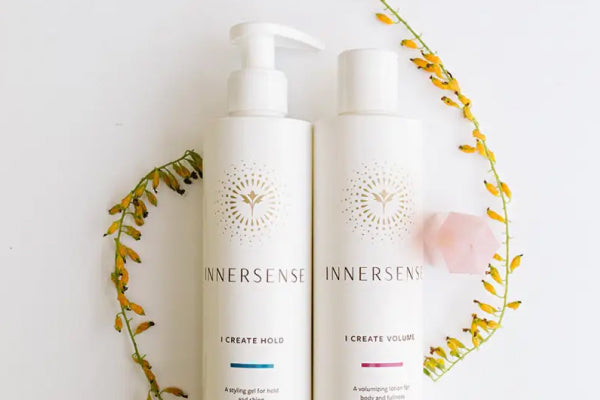
Innersense Hydrating Cream Hairbath is a creamy shampoo made for thick, coarse and thirsty hair. Its cleansers are among the mildest on our table above (isethionates, taurates and glucosides), with jojoba, shea and tamanu in the formula. It is scented with essential oils, including lavender and ylang ylang, so patch-test if your scalp is reactive.
For colour-treated hair
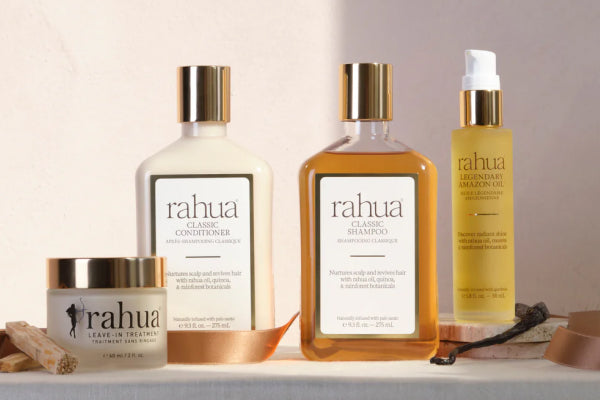
Rahua Color Full Shampoo is a rich, creamy shampoo formulated for colour-treated and highlighted hair, with gardenia and lavender, and rahua, morete and flax seed oils, and free from sulphates and silicones. Pair it with lukewarm water and fewer washes per week. Browse our edit for colour-treated hair.
For sensitive or flaky-feeling scalps
uka IZU Shampoo For Sensitive Hair is made for sensitive, easily irritated scalps, with plant-derived cleansers and distilled kuromoji water; it doubles as a body wash. Its fresh scent comes from mint, rosemary and cedarwood, so if fragrance is your trigger, patch-test first. If your scalp feels flaky and tight, Innersense Scalp Hairbath Shampoo is a treatment-style shampoo with fermented willow bark, green coffee bean extract and pumpkin seed oil, designed to refresh and moisturise the scalp.

New at Alyaka. Balancing shampoo for oily, build-up-prone scalps.
Shop now →
New at Alyaka. Lightweight conditioner that will not weigh roots down.
Shop now →
Creamy, mild cleanse for thick, coarse, thirsty hair.
Shop now →
Rich, sulphate-free shampoo for colour-treated hair.
Shop now →
Gentle formula for sensitive, easily irritated scalps.
Shop now →
Treatment shampoo to refresh a flaky-feeling scalp.
Shop now →
Ready to make the switch? Start with our full range of natural and organic shampoos, pair it with one of our natural conditioners, and explore the Rahua shampoo and conditioner and Innersense shampoo and conditioner ranges. For extra care on dry ends, browse our hair treatments and masks, and see what has just arrived in new in.
Frequently asked questions
Is sulfate-free shampoo better for your hair?
It is better for some hair, not all. Dry, coarse, curly, colour-treated and frequently washed hair, and sensitive scalps, often feel more comfortable with gentler cleansers. Oily scalps and hair that carries a lot of styling product may need a stronger cleanse, at least some of the time. The whole formula matters more than one word on the label.
Why does my hair feel greasy after switching to sulfate-free shampoo?
Usually because the milder cleanser is not shifting everything a strong sulfate shampoo used to remove, such as silicones, heavy styling products or oil at the roots. Wash twice, concentrate the shampoo on the scalp, rinse thoroughly and use less conditioner near the roots. Most people find it settles within a few weeks.
Is sodium laureth sulfate (SLES) the same as SLS?
No. Both are sulfate detergents, but sodium laureth sulfate is generally considered milder on skin than sodium lauryl sulfate. A sulfate-free shampoo contains neither.
Is behentrimonium methosulfate a sulfate?
No. Despite the name, behentrimonium methosulfate is a conditioning ingredient found in conditioners and leave-ins, not a cleansing detergent. It does not make a product “contain sulfates” in the sense people usually mean.
Does sulfate-free shampoo help colour last longer?
Many people with colour-treated hair prefer gentle cleansers, and fewer, cooler washes certainly help. Independent evidence that sulfate-free shampoo on its own keeps colour longer is limited, so treat it as one sensible habit rather than a guarantee.
How often should I use a clarifying shampoo if I go sulfate-free?
Only when hair feels coated, flat or dull despite washing. For many people that is every two to four weeks, more often in hard-water areas or with heavy styling products, and rarely or never if you use little product.
Can sulfate-free shampoo cause itching or flaking?
Any shampoo can irritate a sensitive scalp, often because of fragrance or essential oils rather than the cleanser. If itching or flaking persists, or you notice redness, soreness or hair loss, speak to a pharmacist, GP or dermatologist.
Product details and ingredients checked on 7 October 2026. This article is for general information and is not medical advice.


